Choose your vocabulary with great precision
— Lena Khalaf Tuffaha
I spent years learning how to pronounce
the sacred letters of Arabic at the Madrasah.
How to begin with Bismillah each time
I set out to dream. How to face the Qiblah,
knowing that my Lord listens to my supplications
in the quietude of the masjid. I attended school
where my tongue was shaped into English.
I listened to the radio every day with my father.
On the radio, there was no announcement
of a bomb blast. No gunshots rent the air.
After school hours, we picked flowers in the fields
and chased grasshoppers till nightfall.
On rainy days, our mothers made hot pap
for us to exit the cold. We wore sweaters
and slept in the safety of the beds.
We were children untethered to fear.
We woke up each day to the sky
crowded with birds. The birds traversed
the sky of homeland and returned to the trees
at dusk. They sung of bliss. They picked
leaves of grass in the fields to build their nests.
None of them was shot. None of them died.
There was no smoke of bombs shrouding
the sky. There were no dead bodies
on farmland. No one died at birth.
The women were alive. They carried
their babies on their backs on their way
to the farm. No one fled home.
No one died of bullet wounds.
No one lived in a refugee camp.
Our fathers returned home alive.
They returned without losses in their hearts.
No one stayed awake to watch if the sky
would be occupied by bullets in the midnight.
There was no unrest. There was no riot.
There was peace unbroken by war.
Rasaq Malik Gbolahan is a PhD student at the University of Nebraska-Lincoln. His poems have appeared or are forthcoming in POETRY, Ploughshares, The Nation, Colorado Review, Crab Orchard Review, LitHub, Michigan Quarterly Review, Minnesota Review, New Orleans Review, Prairie Schooner, Poet Lore, and elsewhere. He received Honorable Mention in 2015 Best of the Net for his poem “Elegy,” published in One. In 2017, Rattle and Poet Lore nominated his poems for the Pushcart Prize. He was shortlisted for Brunel International African Poetry Prize in 2017. He was a finalist for Sillerman First Book for African Poets in 2018.
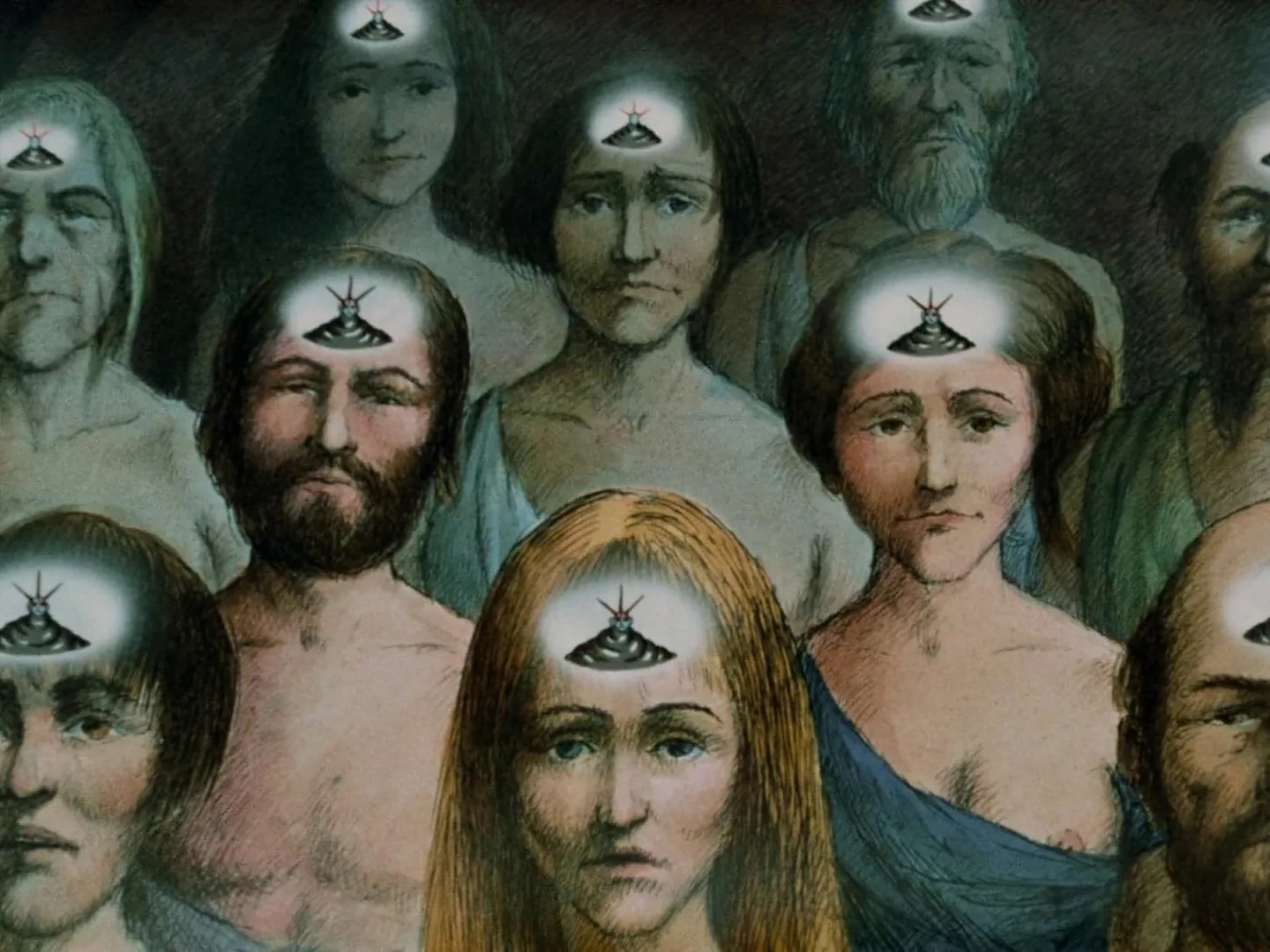
Images from Fantastic Planet (1973), directed by Rene Laloux.