No one told me I would reach
an age in which I seek out
birds, finding joy in gold dust
finches, ruby throated hummingbirds
nasty on the feeder, fighting with their own—
and that we would lean our bellies into the cold

kitchen counters watching them peck
or sip or eat or steal thistle seed
we put out for one kind of bird, but another
takes. Not the long gone great auk with
my grandfather’s estuary eyes but those
still with us: jays and cardinals
crested like rival baseball teams,
kingfishers stoic in the eye but desperate
in the stomach, the way I crave coffee most
the night before, thinking ahead to morning
when I will go through the routine I have
made for myself, structured as a nest and just
as comforting, as these birds flit around me

as though they are my thoughts or my husband’s
as though we found them in the yard after all
this time when of course they were there before
or were drawn in by the array of feeders, by suet
and seeds we set out for them, desperate

as we are now that our children are in and out
by foot or car or sheer emotional
distance which is, too, what the birds bring—
winging beauty and impermanence just by being
birds and I wish someone had explained this to me

that I would reach the age in which I notice birds,
in which instead of hearing their song, I am calling them home.
I am learning to gather seeds—garlic chives, marigolds
both vanilla and pylon orange, coneflowers proudly bald
after I pluck each slim black-tipped seed and keep them
labeled in an envelope to dry and I am reminded

of my grandmother who with her knees in the dirt told me
gardening is the truest form of hope which swells
my empty body as I gather these although she will not see
and would have looked at my penmanship and sighed

because she found hope & errors everywhere
which kept her present, focused as the animals that
prowled her garden & once took up residence
in the driver’s seat of her car where sunflower seeds

had spilled, forming neat rows in the seat seams
as though she had planted them and because the animals—
chipmunks, maybe—seemed so comfortable she allowed
them run of them place until they’d raised their young

walking instead of driving which she told me was good
for her and for the animals who left without warning
and whose presence I think she missed, though she smiled
and began driving again, hopeful they would come back

each season as though they’d all made a pact—
and she would not urge them elsewhere if they promised
to clean up what she’d spilled and I am asking the same
of the dirt today, to hold what I’m taking and make it useful.
Emily Franklin has been published in The New York Times, The London Sunday Times, Guernica, The Cincinnati Review, New Ohio Review, Hobart, Blackbird, The Rumpus, Epoch, River Styx, and The Journal among other places as well as featured on National Public Radio, and named notable by the Association of Jewish Libraries. Her debut poetry collection TELL ME HOW YOU GOT HERE was published by Terrapin Books in February 2021.
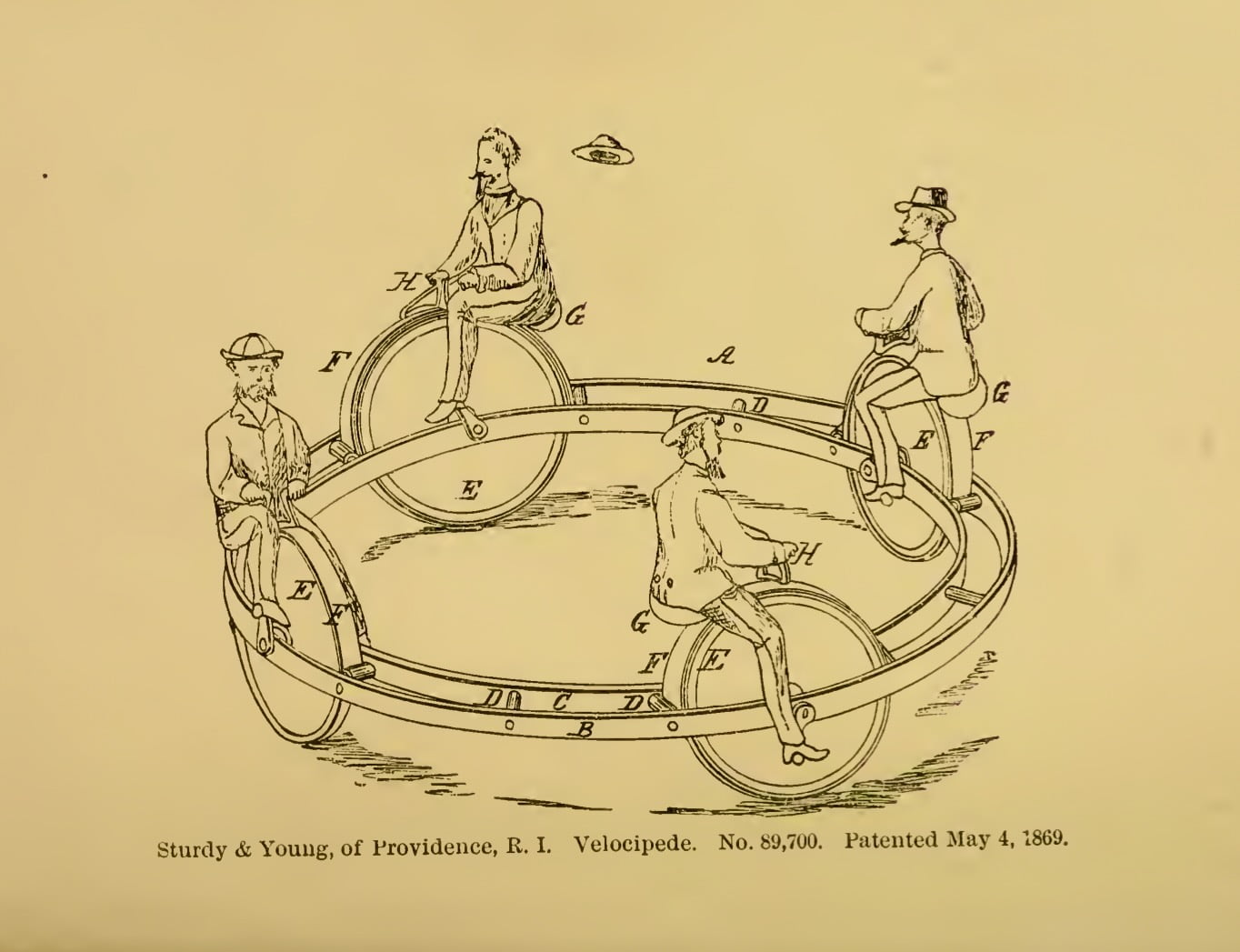
Illustrations of various patents printed in “Cycling Art, Energy, and Locomotion: A Series of Remarks on the Development of Bicycles, Tricycles, and Man-Motor Carriages” by Robert Pittis Scott (Philadelphia: J. B. Lippincott Company, 1889). From Public Domain Review.