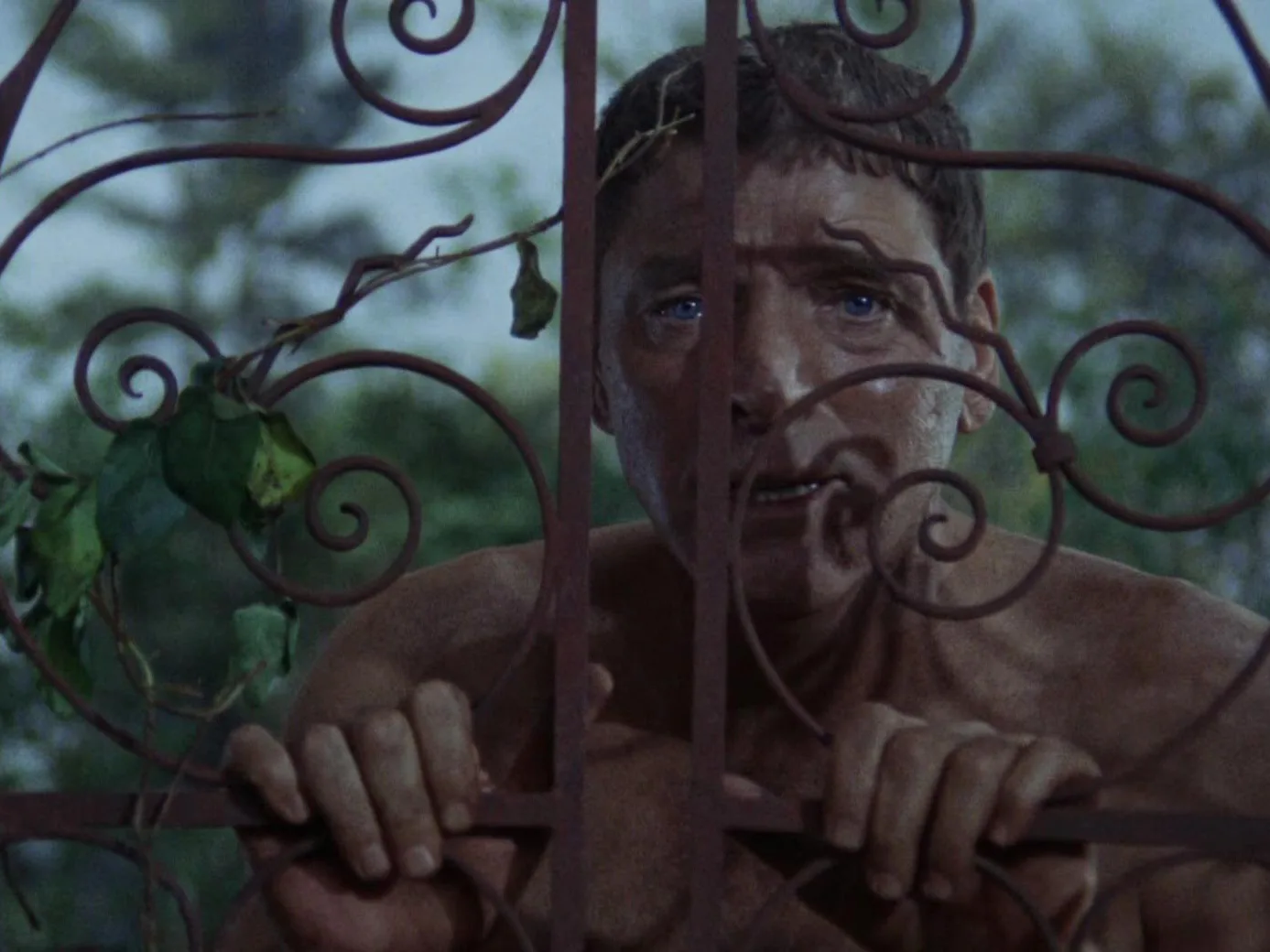
Meg went to the casting call on a lark. The bar was downstairs from her office, a short walk from Maverick on the Blue Line. The start-up where she worked was quietly imploding, and the call would be a welcome distraction, a story to dine out on. That time she was in a Ben Affleck movie. Or was it a Damon? Did it matter? You know the kind of movie. Shots of Fenway and the Pru, dudes in Sox caps and Bruins jerseys. Accents that are overdone and questionable at best, especially for kids from Cambridge where people don’t talk like that. Hardly anybody from Boston talked like that anymore. What Meg had forgotten, and only realized as she was sitting there, was that there were no women in these movies. Or, more correctly, the women only yelled, pleaded, or stoically drank in the background. Which was perfect for her, actually. She wanted to disappear for a while.
Then the director took a liking to her. She had her grandmother’s face, a face from a different century, with a knowingness in her eyes and a jut to her chin that telegraphed hard-won experience. Together with her upscale athleisure, her look bridged a believability divide. Were there still women in Boston today who dropped an f-bomb every other word but also frequented Lululemon? Because the director wanted to make the same old Boston movie again even as the city he knew had simply ceased to exist anywhere but his films.
The director sat her right behind the two lead actors, who were drinking tall boys and fighting over “The Plan”. The plan to do what Meg wasn’t quite clear on, but it didn’t matter, because she didn’t matter. She was set-dressing, like the neon Schlitz in the window or the faux Tiffany lamps over the tables in this Eastie bar, a necessary pivot because the Southie bars used in the earlier films had all become posh tourist destinations. Their patrons now had good teeth and fresh haircuts, not nearly seedy enough for the film’s purposes. This bar, The Claddagh—one of no less than eleven in the metro area—had the grit they desired. Meg and her ancient face were simply gravy.
Shooting a movie wasn’t all that glamorous, but Meg did get to drink real cocktails while the actors repeated the same dialogue in hushed tones with different inflections. The drinks had seemed like a perk when the second AD told her about them, but she’d made a rookie mistake, ordering a Harvey Wallbanger because it seemed like the kind of drink someone would have at The Claddagh in the middle of the day. Now she was three hours and four drinks in. By the time the shoot broke for lunch, the word Schlitz had gone swirly and the crew’s voices sounded far away. That’s why it didn’t surprise her when the director sat down next to her. His face was as smooth and shiny as a balloon animal. He flashed her a big white smile.
“Thanks for bearing with us,” he said. “These cinema verite shots can get complicated.”
“What’s this one about?” Meg asked. Or thought she asked. She might be slurring.
“Quincy boy makes good, loses it all on DraftKings, then plans a heist to get it back.”
“You know you’re doing this all wrong.” Meg swooped her finger through the air to indicate, well, everything.
The director wasn’t used to people talking to him this way, but she was drunk enough not to care. They sat in silence for a minute while his shock wore off. Then he smiled. “How so?”
“The Boston in your movies is, like, 20 years out of date. No one talks like that, no one dresses like that, no one drinks in the middle of the day like that. Those people, they don’t exist here anymore. They’re old men now. Or they’re dead.” Like her dad.
He flinched, then rallied a smile back on his face. “I know for a fact that isn’t true. My uncle sits around with his buddies all day.”
“And he’s retired.”
“Forty years in the fire department,” he said with bluster, then deflated as he realized he was making her case.
“Why tell the same story over and over? Don’t you have other stories to tell?”
The director scowled. Someone shouted his name. A clutch of men at the door waved him over. Just turning to where the sunlight streamed in made Meg’s stomach turn.
“Come back tomorrow,” the director said. “And tell me more.”
He squeezed her left forearm with a force that was both jarring and impressive. She watched him leave, disappearing into the sunlight as if he were passing through a portal into a place she’d never known existed.
She asked for a glass of water and stayed for another half-hour, waiting for her vision to still. The bartender seemed to sense her precarity, refilling the glass before she asked and placing a small crystal bowl of bar mix before her.
“Thank you,” she said, embarrassed. She was too old for such rookie mistakes.
“You with the crew?” he asked. He had dyed dark hair and the stocky build of a former pro athlete, probably football, possibly hockey. She wondered how far he’d gotten. The sports bars of Boston were built on also-rans, keeping up with old teammates on countless TVs.
“Extra,” she said. “I didn’t know I’d be drinking all day.”
“What’s the movie called?” he asked.
“They didn’t tell you?” she asked back, surprised.
“Does it matter?” He lifted his own glass. He’d been drinking all day too, but he was better at it. Self-care, Yankee-style. Numb yourself and get on with it.
“DraftKingPins, I think,” Meg said sheepishly, as if she were responsible for its stupidity. “How much do they pay you?”
“Not as much as they should, probably, but I don’t care. I’ll get some new TVs out of it. They’re real cheap at Costco.”
“Doesn’t it bug you? The Boston they show?” As she said it, Meg saw her mistake. The vision probably looked true to this guy. Maybe he and his ilk had grown scarce, but they still existed.
“It’s all fairy tales. Been that way since the beginning. They’re not even from here.”
He spoke with the true pettiness of the local, seeing the lines and divisions that no one else cared about. Here, not there. Them, not us. Cambridge, not Boston. Meg finished her water and hitched her bag up.
“You okay to get home?” He raised his eyebrows, real concern on his face.
“Oh, I’m not going home.” She pointed upstairs. It was only 2pm. “Back to work.”
As the door closed behind her, she heard him call out.
“I’ll water them down tomorrow.”
True to his word, Declan merely splashed whiskey into her water and Meg spent the following day mostly sober, paying closer attention.
An actress had appeared, tasked with shit-talking the men. She looked familiar. Meg opened her phone to search but got stuck on terms. Where had she seen this actress before? Another of the Boston movies? Meg closed her eyes to think.
“You okay?” Declan asked.
She opened her eyes. “Where do I know her from?” She hooked her thumb over her shoulder. A game of cricket played on the TV over Declan’s head. Always a game somewhere.
“The cop show. You know the one.”
“Set in Philly?”
“That’s the one.”
“She sure sounds like it.”
“None of them can do the accent,” said Declan, “even the ones who think they can.”
“They’re not from here,” she said with a smile.
“And no one talks that way anymore.” He smiled back. Declan himself sounded like he could be a correspondent for NPR. “But they all have a go.”
“It’s embarrassing. Well, they should be embarrassed, but they don’t seem to be.”
“They don’t know what life is like here. They’re from California.”
“Fairy tales,” she said.
Declan smiled like a teacher who’d made his point. Then he gestured with the pint glass he was drying to the actress conferring with the men. “Would you look at that? A whole new you.”
He was right. The actress was Meg’s height, wore the same polished athleisure separates, had her dark hair pulled back into a sleek low ponytail. Her face was prettier, which Meg decided to take as a compliment—everything got a little prettier in the movies. Meg turned away as the director said action. This time, she listened to the actress’s dialogue.
“Aren’t you shitheads tired of doing the same old thing? You’ve been in bars like this, cooking up schemes like this, for what, twenty years?”
“Get tha fack outta…”
“And nobody talks like that either. This city has changed and you’re so obsessed you guys can’t even see it. You’re out here telling fairy tales….”
Here Declan raised his eyebrows.
“…and the world is passing you by.”
The actress picked up one of the beers, downed it, and walked out the door.
“CUT!”
Meg opened her mouth to complain to Declan, but felt a hand on her shoulder. It was the director, again. Quite pleased with himself. “What do you think?”
“You used my idea. And my face.”
“It’s better right? More authentic.”
“One woman calling you…. I mean, these guys on their bullshit doesn’t change much.”
The director looked over at Declan, who shook his head. Meg wasn’t drunk.
“It’s still the same old movie. There’s nothing wrong with it, but if I were you…”
“If you were me?” The director let out a barking laugh.
“You have so much money and power,” Meg paused here, thinking of her boss ten stories up, blowing everything on another reality. “Who needs another movie like this?”
“The studios won’t…”
“You could…” Meg wasn’t sure what had gotten into her. Maybe she wanted to be the mouthy broad they took her for, or maybe she was just tired of men doing stupid things with their money. They always had so much more than she did.
The director stared at her. “Are you always this rude?”
There was a loud smack on the bar behind her. “You got a problem?” Declan had slammed down the pint glass and puffed out his shoulders. His knuckles cracked.
“Not me.” The director put both hands up and backed away, smiling, smiling, believing in the power of that smile beyond its actual impact.
Still, it must have worked on Meg because she called to him. “Let me show you.”
“Show me what?”
“A different story.”
His smile dimmed from dazzle to I-dare-you. He showily looked at his gigantic watch, a stand-in for the cost of his time, but he couldn’t resist her offer. You didn’t have to read Variety to know his day had come and gone. He needed reinvention. And soon, so would she.
They met on the street after hours. She buzzed him in.
“I didn’t know buildings like this existed here.”
It was modern, all glass planes and blonde wood, black doors, and neon logos. Her company, Maverick, was the biggest tenant. Its green lower case “m” loomed over the lobby like a lost piece of candy.
“Cambridge is too expensive. Even the Seaport’s out of reach.”
“Is that so?” The director wore a Woo Sox hat and a Carhartt jacket with a vape pen poking out of the breast pocket. He saw Meg notice it.
“Only on shoots. I get anxious.” He smirked, apologizing, confessing his humanity. Not only did he have vices, he worried like a common human. He cared about his work. It made her like him better.
She led him to the elevator. “I’ll show you around while my key card still works.”
They rode to the top floor where the doors opened on a cube farm. It was blindingly white, nearly paper-free, and completely deserted.
“What did you do here?”
“I’m a publicist.”
“But what is Maverick?”
“Guess,” she said, not because she wanted the upper-hand but because this fact was one of the main challenges the company faced. No one understood what it did.
“Something with solar? Bio-fuels?”
“I wish my boss was that ambitious, but no.”
He walked toward the back windows overlooking the Tobin Bridge and the city beyond. Seeing him here, in this futuristic setting, made him look like one of his characters. Scuffed and gritty, tired and used-up. Then he beckoned her to his side, that face flashed up—Botox? Fillers? Whatever it was, it was working—and he became a star again. Which begged the question. Why not just be a star? Why the obsession with being a man he never was?
“Beautiful,” he said to the window.
“I don’t think anyone’s ever called the Tobin Bridge beautiful.”
“Uplit like that? With the skyline next to it? I’ve never seen the city from this angle.”
“Obsessed with the southern view.”
“The movie that made me.” He turned back to the desks. “Which one is yours?”
She pointed to a cube next to a glass-walled conference room. The openness was to make them feel like a team, but when everything unravelled, it just made for a spectacle. The director searched her desk for clues but its glossy surface lay bare. She’d spent the last week shredding every document she’d ever created.
“Clones?” he asked.
“I wish,” she said. “They could clean up this mess for us.”
“Doesn’t look messy to me. Looks surgical. Synthetic insulin?”
Looking at his hopeful face, she felt ashamed. Sure, he was making the same movie over and over, but once upon a time the story had been true. She had spent her days spinning lies. What was she trying to show him? Away from the cameras, under the fluorescent lights, her life seemed as pathetic as that of anyone sitting in a mid-day bar.
“Every time you guess I feel even worse about working here. It was virtual reality. A means of escape. Nothing actually useful.”
“The founder?”
“A smarty pants from MIT…”
“I know the type.” He smirked; he’d starred in the movie.
She was wrong about her job, her city, the world. None of it was new. “The technology was a sham. It never worked.”
“And you…”
“Lied to everyone. Told them we were changing the world. How? I never asked.”
“You didn’t know?”
“Still don’t know. Doesn’t matter now.”
The director stuffed his hands in his pockets and walked toward the elevators again. He hit the down button and spun to face her. “I can’t make a movie about an empty room.”
“Put some people in it.”
He shook his head. “When you’re my age, you don’t get to start over. You go with what you know.”
His balloon animal face sagged at the edges. She wanted to reach out and touch it, drag a finger through his stubble, tell him he reminded her of her dad, who would have given anything to start over. Was that why she’d brought the director here? To get some dad advice? There was no audience for her life anymore now that he was gone, and she wanted someone to witness how things had changed. Maybe when you lived long enough, everything just repeated, just like the director’s movies. If only her father had lived long enough to teach her.
“So, I should be grateful that I get to start over?”
As it became clear Maverick was going under, everyone had given her this advice, but she was tired and she didn’t want to change. She wanted everything to go back to the way it used to be: her job, her dad, her city. Somehow, the director had managed to bring her over to his side. The past was always greener.
The director fished two fingers into the pocket with the vape pen and pulled out his card.
“If you’re ever out west, give me a call.”
“Go west, young woman?”
In a movie, this moment would be her big break. In real life, it wasn’t.
He shook his head. “I don’t see that for you. I think you’re where you’re supposed to be.”
He meant it as a compliment. She’d found her place. She didn’t have to borrow one. The lost job was a temporary setback, a plot point that made the heroine more interesting. She could only hope. “What am I supposed to do?”
“I don’t know what’s next. I’m obsessed with the past, remember?”
He smiled until his gums showed pink and then he stepped on the elevator.
“Aren’t you coming?” He put a hand across the door.
“I need to pack up.”
They both knew this was a lie, but the director only nodded as the doors closed.
The city, as Meg knew it, didn’t play. She stood alone in the empty office. There was no trace of all the work she’d done, all the hope they’d had together. It was the same when her father died. There was the house, sure, but what had happened to him? All the love she’d ever had for him was still inside her. Where was his love for her? She thought about this all the time as she’d navigated the days and weeks without him. She looked out at the bridge sparkling in the night, then closed her eyes. Inside her eyelids burned the image of the bridge and the director reflected in the glass. His faded hat. His fraying jacket. The gray stubble, the sad eyes. Not the director at all, but the person she was always looking for and never finding. Finally, she understood the director’s nostalgia. Her father was in all the places he’d been, all the people he knew. Letting go of the old world meant letting go of him, a loss she couldn’t bear. She didn’t want to start-up. No, she wanted to rewind, again and again.
In the end, the director took her advice. DRAFTKINGPINS got dumped to Red Box the following January but was followed soon after by MAVERICK at Sundance. The film was a departure from his previous work, a futuristic drama about a renegade scientist working in an all-white lab who risks it all to recreate the city he once knew and loved. Only his technology works. There was The Claddagh resurrected with Declan at the bar and the actress (now the director’s third wife), raising her Harvey Wallbanger to the camera with a smile, without a Sox-capped, Bruins-jerseyed man in sight. The woman in the bar was the lead. Not quite the same old movie. Not quite Meg’s story, but a kind of bridge that, if you looked at it the right way, might lead somewhere new.
A graduate of the MFA program at Columbia University, Caitlin O’Neil has published short fiction in The Massachusetts Review, The Kenyon Review, The Indiana Review, Ninth Letter, and other publications. She has won the Tampa Review’s Danahy Prize, the Ninth Letter Prize in Fiction, the Women Who Write International Short Prose Contest, and received a Massachusetts Cultural Council individual artist grant. She’s been a resident at Mass MOCA, the Community of Writers at Squaw Valley, and the Vermont Studio Center.
A series of woodcuts from an 18th-century chapbook entitled The World Turned Upside Down or The Folly of Man, Exemplified in Twelve Comical Relations upon Uncommon Subjects. As well as the amusing woodcuts showing various reversals (many revolving around the inversion of animal and human relations) there is also included a poem on the topic. The chapbook is reproduced in the wonderful Chapbooks of the Eighteenth Century (1882) edited by John Ashton, which brings together hundreds of facsimiles of 18th century chapbooks upon a huge range of subjects.
See more at https://publicdomainreview.org/collection/the-world-turned-upside-down-18th-century/