I.
After midday meal, granny sent us
out on our own. Morning gardens,
farm chores, and seasonal matters dispatched,
we sought the cool creek contained by shale banks,
mossy stones, ferns, and sycamores or
naps on cool quilts spread on lush orchard grass.

We wanted for nothing, like the fox—
rusty flash that hunted by rotten logs,
flashed white tail-tip as it pounced
on summer plenty—played content
to creek murmur and bird songs.

II.
My mountain people sang old songs,
ballads brought on from old countries.
Old love songs my granny disparaged
as longing for the wrong things, telling
the sand end of wanton desire.

What she called love songs,
Lorca called deep songs,
ballads and romances traveled
by gypsies, soldiers, and lovers
longing for passion, glory, and home.

On an orchard-spread quilt, far past
napping age, I read Lorca, imagined
guitar trills on patios, by campfires,
gypsies romances on the wind.
Safe in my orchard, I think of him
shot and buried in some ancient grove.
His crime—
a desire unapproved by the state.

III.
By creek banks, firesides, long evenings
on porches, patios, or plazas where people
gathered to share longings—
us with crickets, creek murmur, and
fox bark in the forest, or a circle of wagons
with guitar wail at watering place,
or plaintive Fa So La of Sunday morning,
songs release what stirs the soul—
wail, sigh, shudder, and moan bind us all.
When I have reached the point of suffocation
by my house, my chair, my body,

I go out on the paths and let the birds
sing down of hunger, lust, fledglings,

and shelter, all paramount to birdness.
When I reach the point of suffocation,

I go on the screened porch, be soothed
by rain, listen to squirrels raise alarm,

annoyance, train pups in the windy
weather when hawks won't fly.

When I reach the point of suffocation,
I go out to the fields, shuffle rows

where mowers run, watch turkeys
glean grain, turn stubble for bugs

and grubs, fuzzy poults, runners
from birth, mimic food gathering,

head for the trees and a night
roosting place safe, quiet and dark.

When I reach the point of suffocation,
I go to the giant beeches, gather feathers

shed from roost, make iridescent fans,
arrange art of hulls, acorn caps, and pebbles

among the roots that run between
the tangled and ancient crones,

and a web of root-born
warning, wisdom, and endurance.

When I reach the point of suffocation,
I lounge outside, feel the dark, breathe the night,

watch the stars that watch us all,
reside in us all, call me home.
Like an October hummingbird,
she glittered, flashed, and was gone.
A background life to mine vanished.
After the Wilburn Brothers sang
on our black and white TV,
Loretta was worth the wait—
they called her a girl singer, but I could
see a woman who took on life.
A four door woman who lived hard,
stood her ground, knew the business
end of a hoe, a stick-toting woman
(my mama's words after seeing her live.)
Coal Miner's Daughter proved
mama right when onscreen Loretta
took a stick to a trashy woman and
Loretta's wandering Dolittle.

Too-young married, I lived
The Pill, Fist City, and One's on the Way.
The Van Lear Rose drew me back
in middle age to the woman
with boxes of unsung songs
stored beneath her bed,
rhinestones on hardwood,
her heart full-voiced,
her memory our blessing.
A native of upper East Tennessee, Jane Hicks is an award-winning poet, teacher, and quilter. Her poetry appears in both journals and numerous anthologies, including Southern Poetry Anthology: Contemporary Appalachia, Southern Poetry Anthology: Tennessee, and Southern Poetry Anthology: Virginia. Her first book, Blood and Bone Remember, won several awards. Her “literary quilts” illustrate the works of playwright Jo Carson and novelists Sharyn McCrumb and Silas House; one became the cover of her own book. The art quilts have toured with these respective authors and were the subject of a feature in Blue Ridge Country Magazine in an issue devoted to arts in the region. Her second poetry book, Driving with the Dead, was named Poetry Book of the Year by the Appalachian Writers Association and was a finalist for The Weatherford Award. Her third book of poetry, The Safety of Small Things, debuted in January 2024.
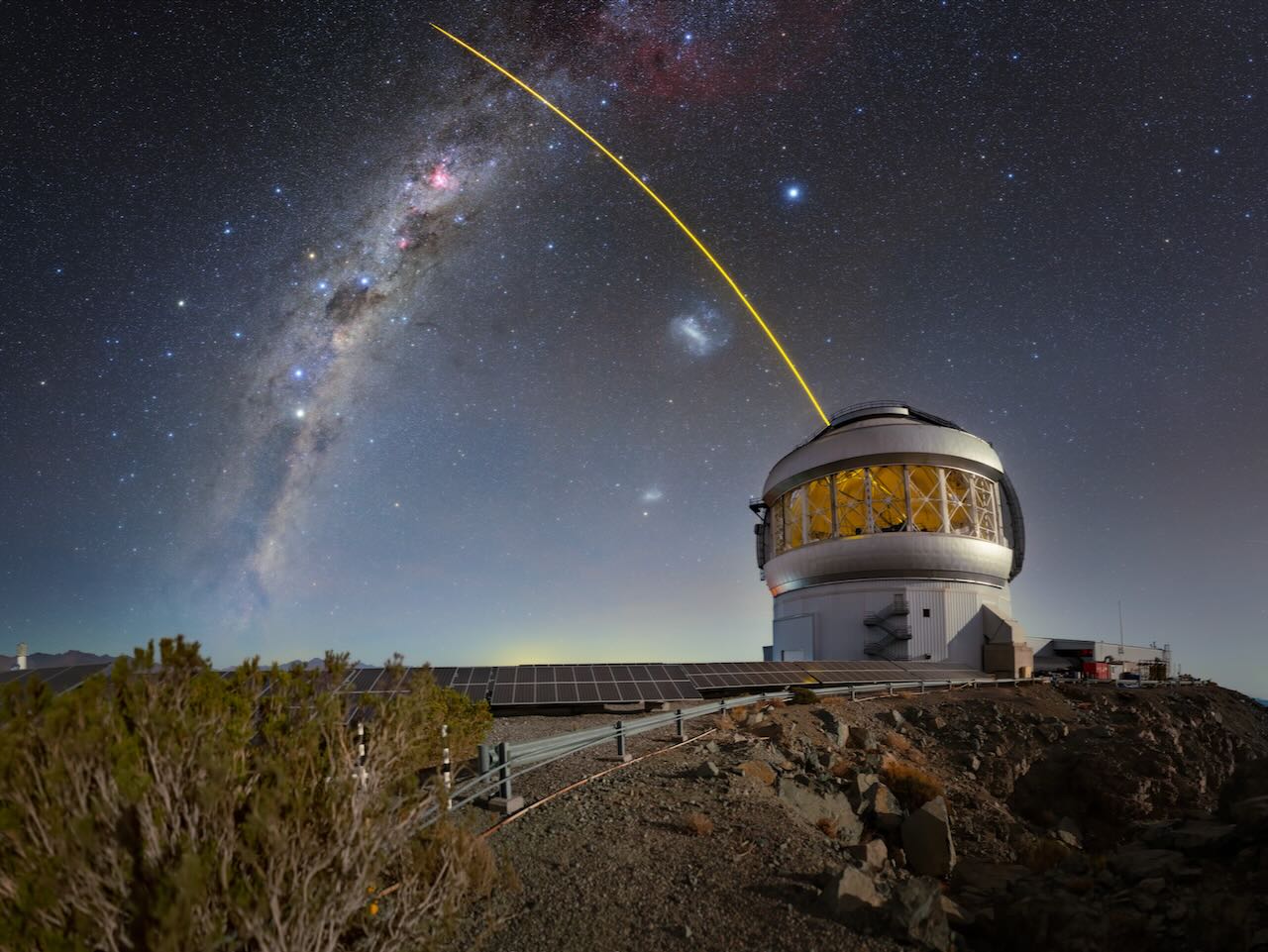
NSF’s NOIRLab (formally named the National Optical-Infrared Astronomy Research Laboratory) is the US national center for ground-based, nighttime optical astronomy. Images found at https://noirlab.edu/public/programs/csdc/