A Literary Mosaic
The birthmark of death grows at a different pace with each of us. – Tomas Transtromer
1.
As the name suggests, it’s the job of the patient to demonstrate patience. So, I passed nine days of torturous waiting before the surgeon finally phoned with the results of the biopsy. I had what he called an “oddball cancer.” What other kind would a poet have? I felt worms crawling up my nose and out the corners of my eyes – me, who once actually believed that the materials expelled by exploding stars were the very same materials that compose us.
The surgeon stood on the other side of the room, about as far from where I sat on the exam table as he could get, his arms folded protectively across his chest. He was explaining how this cancer spreads via the bloodstream, causing murder and mayhem along the way. I hadn’t the medical vocabulary to question him or object. I just listened in glum silence. There wasn’t even a window for me to look out. It was spring, but the plants were still all underground. And now death had my shaped face.
Everything has changed, and nothing has. It still rains when the forecast says it won’t. Hummingbirds still come to the oriole feeder. The angel of history still hosts orgies of torture and murder. Doors still open from both sides. The abandoned buildings of defunct chain restaurants are still being converted into churches. My wife, Barbara, still has a kind heart, but also a troublesome heart valve that may require surgery. I still put drops in my eyes first thing in the morning as if there’s a future I still have a chance to see.
I was somewhere else in my head when I pulled up to the drive-thru window. Only a couple of days before, I had been diagnosed with a rare cancer, a liposarcoma, one of 14,000 cases a year in the U.S. A heavy-set woman peered out at me. I handed her a ten and she handed me a box of donuts. “Have a nice day, Hon,” she said with a smile, exposing a dark gap where a couple of her bottom teeth should have been. I felt a weird kind of kinship, like we were mutineers who had been marooned on a remote desert island together. The sun was in my eyes the whole way home.
They’ll mark with permanent ink – in effect, tattoo – the exact area to be irradiated. I visualize it being a kind of connect-the-dots drawing of the moon face of a murderer. After the first week or two of treatment, I can expect to feel resentful. I’m already subject to grisly thoughts, ripples of loneliness, confused dreams. Although I continue to try, I can no longer locate the universal in the particular or the still, small voice of conscience amid the roaring in my head. Healthy people avoid me as if afraid of catching cancer. My own doctor looks away when he talks to me. Only the dead, apparently, are prepared to take me in.
The anguish of discovering that I have cancer has been amplified by a second discovery – very few people seem to care. Only a tiny number have called or texted me. Where’s the expected love and support from relatives and friends? Where? I’m like a sailor trapped on a broken submarine, miles underwater and almost out of breathable air, banging desperately on the pipes in the mistaken belief that searchers are up there listening.
There’s a slow hissing sound, like air being let out of a balloon, but it’s the heart that’s deflating. I think of the whitewashed room with a view of fields and woods where Simone Weil starved herself to death in a conscious effort to go quietly to God. My own consciousness is acquiring a more militant cast, as if cancer can impart a perverse kind of courage, an unfailing will to tell the truth, however indecent.
I’m on WebMD reading about the survival rate of sarcoma patients. My head feels like a crumpled ball of paper. You can stare into the dark for only so long before the dark begins staring back.
Demonstrating the awful weight of grief through death songs has been a part of funeral rites for as long as there have been funeral rites. The ancient Greeks sang death songs to satisfy the dead, whom they believed could hear and judge their cries. Death songs were common in many other cultures as well, from the Assyrians to the Celts to Native Americans. A Native American death song, typically slow and somber, was meant to help the soul of the deceased transition into the afterlife. Death songs were also sung when preparing for death. “Sing your death song and die like a hero going home,” the Shawnee chief, Tecumseh, instructed his warriors. I beat my breast and tear my hair and wail.
Online acquaintances – I hesitate to call them “friends” despite their being designated as such on Facebook – have offered unsolicited advice on how to “beat” cancer. Most advise forsaking conventional medicine and its reliance on the aggressive use of drugs and radiation. One person claims that the body repairs itself when denied food and recommends that I undertake a series of 72-hour fasts. Another recommends instead that I change what I eat. He cites a man in Blue Springs who got rid of his Parkinson’s on the Keto diet. A number of people have emphasized the healing power of a positive attitude. Cancer, in their New Agey view, is a kind of lifestyle issue that can be resolved with meditation apps, breathing techniques, self-reflection, etc. Along much the same lines, I’ve been assured by some that as bad as having cancer is, I’ll emerge from the ordeal wiser and stronger. It doesn’t seem to have occurred to any of them that I might possibly emerge as a gaunt, cancer-riddled corpse.
The doctors at the Cancer Center want yet another view of my chest. It has me worrying that they saw something suspicious on my last CT scan – for instance, an expiration date. They’ve ordered an MRI for the day after tomorrow. I’ll need to premedicate. The MRI machine is a big tube into which the patient, lying on his back on a table, is inserted like an enema. I’ve had MRIs before. For anyone who gets anxious in enclosed spaces, it’s far from a happy experience. My mouth goes dry. My heart races. I forget to breathe. Meanwhile, the machine is making such hideous noises, screeching and banging, that you can’t actually hear the music intended to calm you playing over the headphones you’ve been given. And so, an hour before the procedure, I’ll take an Ativan I’ve got squirreled away and hope it sweeps me off to a land that’s fair and bright, and where metastasis is unknown.
Now that I’ve brushed up against my own death, I feel like it’s incumbent upon me to be changed by the experience – to use it as impetus for reevaluating my life and relationships. Otherwise, what’s the point? There wouldn’t be any, no point, no redeeming aspects, only confirmation of what I always suspected, that we aren’t in control, that existence is brutally governed by blind chance, that at any moment and for no justifiable reason one can be pulled out of line and sent off to be gassed.
I call myself a poet. Writing is my daily ritual. It arrests the flow of time while I’m doing it and keeps my congenital sadness temporarily at bay. For years, I’ve inhabited the role of poet as if it were a suit made of a miraculous material, like a superhero’s costume, fireproof, bulletproof, death proof. It’s only since my cancer diagnosis that I’ve realized the extent of my mistake and the effort I put into maintaining it. All of us alive now are dying. Some of us are dying more painfully or obviously than others, but we’re all moving along the same somber trajectory. Come morning I’ll pour myself a cup of black coffee, the more bitter, the better. I’ll open my laptop. I’ll move my fingers over the keyboard. I’ll be one more poet the world in its hurry ignores.
The first session of my five-day-a-week, six-week-long radiation treatment is a week away. From what I’ve read and been told, the major side effect will be fatigue (a minor side effect will be dry, itchy skin from “sunburn” at the target site on my back). The fatigue from receiving radiation is said to be different than just feeling tired. It’s supposedly like nothing I’ve ever experienced before, a mind-numbing, soul-crushing, all-consuming weariness, a giant boulder that comes crashing down and flattens you. My fear is that within a couple of weeks of the start of treatment I’ll be simply too exhausted from the cumulative effects of the radiation to be able to write. The urge to write will still be there, but not the mental energy to actually do it, and I’ll be reduced to whimpering like a baby abandoned in a dumpster or howling like a beast pining away in a dark woods.
Since I spend so much of my time alone in a room writing, I don’t know that many people, but cancer is epidemic among those I do know. A Midwest poet, a guy half my age, lost an eye to cancer just a few months ago. The poet laureate of Murfreesboro, Tennessee, is suffering from pancreatic cancer, as is the very nice woman who taught two of my kids in kindergarten. An old colleague at the university has had his intestines rerouted because of colon cancer. The brother of one of my sisters-in-law is receiving chemo for liver cancer. A first cousin of mine was in his early 40s when he died of esophageal cancer and now some 20 years later his widow has been diagnosed with an inoperable brain tumor. The other night on the phone I asked my brother, a doctor, whether genetic predisposition determines who gets cancer and who doesn’t. “It’s the environment,” he stated flatly. He meant that the air we breathe, the water we drink, the food we put in our bodies are gradually poisoning us. The philosopher Susan Sontag cautioned against treating illness – tuberculosis, cancer, AIDS – as a metaphor. Yet counting up the dead and dying of my acquaintance, it’s difficult to avoid the conclusion that the rampant incidence of cancer is a metaphor of sorts, a sign of a toxic lifestyle and a society blithely indifferent to its own internal rot.
The weird part is that I don’t feel sick. In fact, I feel pretty healthy. There’s no evidence on X-rays, CT scans, or MRIs that the sarcoma wasn’t entirely scooped out by the surgeon or that it has metastasized to my lungs. The only visible sign that I have – had? – cancer is the nasty scar under my left scapula from the operation. I’m about to start radiation treatment regardless. The doctors say that without it, I have a 30 percent chance of a sarcoma recurring, but with it a 15 percent chance. I’m willing to pass through fire to secure the better odds. As long as I can make love with my wife, still recognize the faces of our grandchildren, read new books, play the ukulele, and listen to baseball on the radio, death holds no allure. Besides, I’m just getting good at writing.
And then there are days like today when a murderous headache underlies everything; when I’m downwind of Hell and overcome by the stink; when radioactive waste is discovered stored in three of the four chambers of the heart; when I’m told “You got this!” by a Facebook friend but lack any inclination to believe her; when I can taste death on my tongue and it tastes like crusty orange scabs of rust; when, for all my supposed intelligence, I can’t identify what’s real and what’s not and am bewildered by the sight of a hummingbird hanging motionless in the air on whirring wings.
I’ll be living at a Marriott Courtyard – or, in the hotelier’s preferred and more elegant sounding syntax, a Courtyard by Marriott – weekdays for the six weeks I’m being bombed with radiation. The hotel is located in Brookline, a once heavily Jewish neighborhood bordering Boston and a walkable distance, a mile or so, to the hospital. I don’t exactly relish the prospect of residing in a room that has all the charm of a cardboard box under an overpass. I’ll miss the familiar clutter on my desk at home and the view of the salt marsh out the window. I’ll miss having a favorite coffee cup within reach while writing.
Radiation treatment is supposed to take up only about an hour a day. That leaves a lot of time to fill. The hotel has an exercise room and an indoor swimming pool I can use if motivated (unlikely). There are also a couple of art museums, the Gardner and the MFA, close to the hospital. The Gardner is probably more famous for an art heist that took place in 1990 than for its art exhibits. Thieves made off in the night with 13 canvases, including one by Vermeer and three by Rembrandt. None of the paintings were ever recovered. The frames from which the pictures were stolen hang eerily empty on a wall in the Dutch Room, like the wide, blank eyes of cancer patients.
I begin treatment tomorrow afternoon in Boston. Barbara and I have been getting organized for a while now, dragging suitcases out of the back of the closet, buying travel-size toiletry articles, monitoring the 10-day weather forecast. Our oldest daughter asked on the phone today if I was anxious. I lied and said no. Maybe I was wrong to disguise my true feelings, but I made up my mind when I was diagnosed with cancer to act stalwart, to be a model of fortitude. Although my children are grown and have children of their own, I decided I still had a responsibility as a parent to try and teach them something useful about facing adversity. After all, it might be the very last thing I would be around to teach.
Barbara dreamed last night that she was the one receiving radiation. She was shown three discs, half silver and half black and about the size of a quarter. While the discs all looked alike, each was apparently intended to address a different medical condition. She was asked to choose which she wanted applied to her skin and was still struggling with the choice when she woke up. Although she told me about the dream between sips of her morning coffee, she didn’t seem to attach any great significance to it. It was only of genuine interest to me. I asked where it took place, who her interlocutor was, what she was feeling. She couldn’t remember and didn’t really try to. Mostly she just shook her head in exasperation at my insistent curiosity, unwilling to play the part I assigned her as an oracle whose puzzling dream, if penetrated, would disclose the future.
We were halfway to Boston when my phone went off. Barbara answered because I was driving. It was the Cancer Center. The man on the phone said the radiation machine had broken. My 4 p.m. appointment was canceled and rescheduled for the next morning at 11. I had been nerving myself up all week for my first treatment session. Now this. We drove the rest of the way in rain.
2.
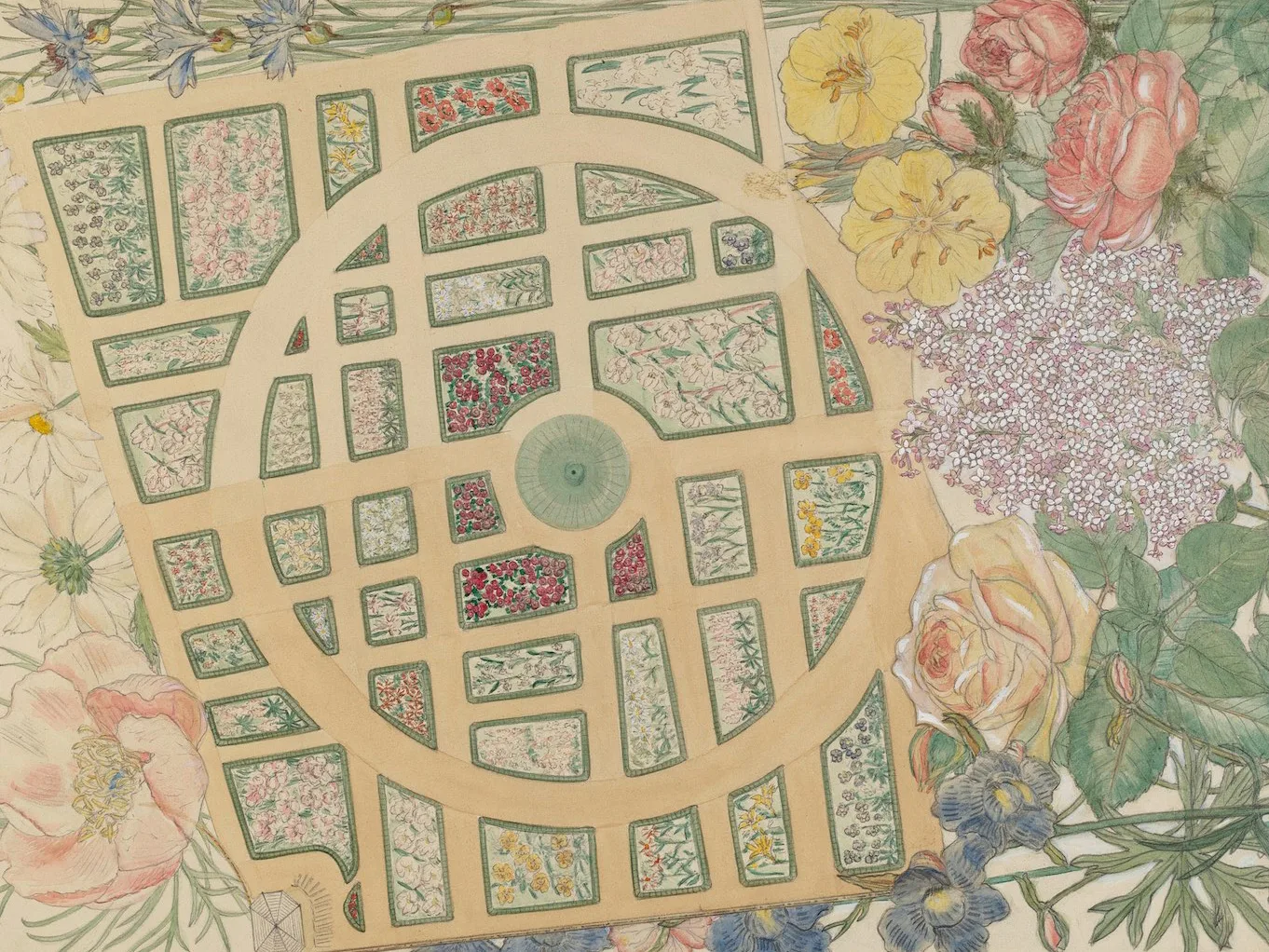
A half-hearted attempt has been made to brighten the waiting room of the Radiation Oncology unit by hanging up muddy, amateurish paintings of flowers. But better art or even actual flowers couldn’t lift the oppressive atmosphere. Anyone waiting on the hard-backed chairs ranged along three sides of the cramped, low-ceilinged room – a reception desk occupies the fourth side – is either a patient getting radiation or someone who has been dragooned into accompanying them. As a newcomer, I sneak glances at the patients from under the bent brim of my Red Sox cap. Some doze. Some tremble all over. Some have a book open on their laps while staring glassily into space, their faces leeched of color. If they weren’t old when treatment started, they look old and shriveled now. I feel an unexpected surge of pity. Only after my first couple of treatment sessions do I realize it may have been more for myself than for them.
The machine that delivers the radiation is called a linear accelerator and resembles the bastard offspring of a construction crane and an alien life form. Its tentacle-like appendages pass over me while I lie on my stomach on a thinly padded table in a cold, dim subbasement. My shirt is off, my head turned to the left, my arms stretched above my head and crossed at the wrists. I must lie in that position, still as a corpse, for the 10 or 20 minutes that the machine, humming and beeping, fires X-rays from all different angles into the site of my tumor. Except for my discomfort at having to hold so still, the procedure is painless. Done, I hop down, put on my shirt, wave bye to the tech behind the glass, and leave until the next day, when, like a martyr restored to life, I’ll be burned alive again.
We’re heading home for the weekend after my treatment today. In an unfortunate coincidence, Hurricane Lee is heading to the Cape, too. It’s expected to bring violent winds and an explosive storm surge. Trees will thrash, windows rattle, roads and beaches flood. Powerlines will blow down and our lights go out. Even then, it’ll be good to be home. Some kinds of darkness are preferable to others.
A neighbor of ours once worked as a counselor of some sort in a cancer ward. She told me the other day that she had been able to predict just by looking at them which of her patients would survive and which wouldn’t. The ones who made it, she said, exhibited a positive attitude. Then she handed me a baggie of finely ground pot.
Room 633 at the Courtyard by Marriott, where I’ve set up my laptop on a desk-cum-dresser-cum-TV stand, is an incommodious space that might have been specifically designed to induce writer’s block. To my immediate left, the air conditioner makes a godawful racket while blowing Artic air directly on me. When I raise the thermostat even a degree or two, the room reverts to a primeval bog, so I’ve opted instead to freeze. The window above the air conditioner gives onto an uninspiring view of flat roofs and commercial signage under an autumn sky the purplish gray of a cyanotic baby. With a blank document open on my screen, I scooch the desk chair forward as if to more closely examine my lack of progress. Indistinct voices from the TV playing in the room next door seep through the wall facing me, like the incoherent mumblings of a demented ancient Muse.
The best writing advice I ever received wasn’t intended as writing advice. It was at sleepaway camp when I was just 12 years old. My bunkmates and I had congregated on a two-lane bridge over the Delaware River. I was standing beyond the safety railing, staring down at the wind-ruffled water. Three or four others had gone off the bridge without incident ahead of me. Nonetheless, gripped by fear and doubt, I hesitated. “Come on already!” my bunkmates finally all started yelling. “Jump!”
The radiation techs – the hospital calls them “therapists” – who put you on the linear accelerator and take you off it and in between monitor its operation on computer screens are unfailingly cheerful. In fact, you might think they were hired for their reliable cheerfulness and not for their technical expertise. One or another of them always greets you with a wide smile, chatters happily while walking you down the hall to be radiated, says “Great job!” when the day’s treatment is finished. Such relentless positivity is intended, of course, to counteract the gloom of the hospital setting. But no matter how compassionate the intention, all that bubbling enthusiasm can in time come to seem gratingly incongruous. As much as you want comforting and encouragement, you also want honesty, authenticity, someone to acknowledge the gleaming black shadows knifing toward you.
“Tonight was the best I’ve felt in over a year,” the poet who lost an eye to cancer posted on Facebook. “For a few hours I didn’t think about cancer or doctors and actually laughed.” Words like curious Paleolithic markings on a cave wall. Meanwhile, the poet laureate of Murfreesboro, Tennessee, has updated me on his condition: “Chemo week. No sleep last night. Jabbing cramps today. And I’m still dying.”
We encounter many things in the world only and always as words, behind which the things that the words represent remain in the shadows, hidden. Until a mere two months ago, cancer, chemotherapy, radiation fatigue were amorphous terms to me. And this despite my acquaintance with people who had had cancer and had undergone strenuous treatment for it. Having never gone through any of it myself I couldn’t know what the experience was genuinely like for them, how being locked inside the experience felt. Now I can. Now I have some idea. Cancer is no longer a vague concept. It has actual physical dimensions. It’s the ugly four-inch scar under my scapula where the tumor that ballooned beneath the skin was removed. It’s the exhausting daily rounds of radiation. It’s the chill that just hearing or seeing the word “cancer” now provokes. The tragedy isn’t so much that I have cancer, but that I had to suffer cancer before I could even start to approach an understanding of what other people suffer.
The Courtyard by Marriott actually has a courtyard, a large grassy area in the middle of the hotel that is fringed by ornamental trees and supplied with park benches and café tables and chairs. One afternoon after my radiation session I was sitting there in the sun reading when I heard eerie screeching and looked up. Three red-tailed hawks were crisscrossing overhead, weaving swiftly dissolving patterns in the air. It was a grateful sight but a surprising one in such an urban setting. Watching the hawks swoop and swirl and glide gave me a strange feeling as if I had been granted a wish I didn’t even know I had made.
Graham, our second oldest, finally went to the dermatologist for a lump, about the size of a fat grape, that had developed on the back of his left shoulder some time ago. He had ignored it until alarmed by my diagnosis. His doctor didn’t think the lump was anything special, just a harmless lipoma, but given my now notorious history, she removed it in her office (or as much of it as she could; it was entangled with the underlying muscle) and sent a tissue sample out for biopsy. Yesterday, while I was in radiation, Graham called Barbara with the results. The preliminary findings show changes in the cells consistent with the same type of cancer I have. Statistically, the chance of an occurrence of such an extremely rare cancer in more than one member of a family is infinitesimal. And yet it seems to be happening to us, a defect or mutation being passed down through the generations. Barbara has been crying on and off ever since we heard. I’m riddled with guilt. Graham, who has always been mentally and physically tough, a marathon runner, a mountain biker, a graduate of MIT, sounds shaken. Next week is his 40th birthday. Birth is a death sentence.
I was a news junkie once. I had an unappeasable appetite for big, juicy headlines and fresh morsels of political gossip. No more. There’s enough turmoil and drama going on in my own life now that I don’t have to turn to the news media for some. And if I did turn there, what would I discover anyway? As perverse a spectacle as the world has ever presented. Unremitting violence. Scandalous stupidity. A revolting parade of grifters and grotesques and buffoons, with Death marching at its head, waving and nodding to an enthusiastic crowd of nobodies.
As I approach the midpoint of my treatment, I haven’t suffered any of the severe side effects from radiation I was led by others to believe I might. No bouts of vomiting. No disabling fatigue. No ugly, painful skin rashes. Ironically, the worst side effect I’ve suffered has been something no one thought to mention: sleeplessness. Over the past week or so, I’ve had increasing trouble falling asleep and, when I finally do fall, staying asleep. I typically see every hour between midnight and 5 a.m., at which time, with the window of my hotel room beginning to brighten, I give up on sleeping further and crawl out of bed for the day.
It’s possible, maybe even likely, that the main cause of my sleeplessness isn’t the radiation I’ve absorbed, but the stress wrought by the series of Job-like traumas and afflictions being visited on me and my family. First came the shock of my cancer diagnosis. Then word that Barbara needs her heart valve promptly repaired or her condition will become irretrievable. Now Graham may also have an eccentric kind of cancer.
In the King James Bible, the messengers who arrive one after another to inform Job of the latest calamity to befall him conclude their accounts with the same haunting refrain: “And only I have escaped alone to tell thee.” I take it to be a veiled warning as to just how precarious our control over our affairs is and a reminder that if there is a God, He must be a real shit.
Sometimes music is playing in the radiation chamber when I enter. The Beatles, Billy Joel, Elton John – stuff just this side of elevator music. One day, as she adjusted my position on the linear accelerator, a tech asked if there was any music I wanted to hear. “The Ramones?” I said. And voila! I received my daily dose of X-rays to the glorious clamor of “Blitzkrieg Bop,” “I Want to Be Sedated,” “Beat on the Brat,” “Rockaway Beach,” and “Sheena Is a Punk Rocker.” “Must’ve been hard to lie still,” the tech said after. Today there was no music and no one asked if I wanted to hear any. There was only me arranged like kindling for the fire-breathing machine.
It’s the second weekend in a row of rain. Home from Boston, I sit at the kitchen table flipping through the school assignment pad where I jot down passing thoughts and observations, some in so hurried and fragmentary a fashion that later I can’t decipher them. Here is a note to myself I can decipher: Time has no shape of its own but assumes the shape of what you do in it. On weekdays, I burn; on weekends, the ashes cool.
Barbara and I haven’t made love in a couple of weeks, an age for us. We seem reluctant to even casually touch each other. It’s as if we’re afraid touching will leave guilty traces on our skin. Always in the past when confronted by news of sickness and death among family members or friends, we fought back by making sweet or wild or desperate love. This time it’s different. This time it’s our own bodies in disrepair. This time it’s our son’s body. We would feel like the worst kind of ghouls to make love now while death is circlingcloser and closer to what our love made.
When Ernest Hemingway was a young writer in Paris in the 1920s, he would go almost every day to museums to see the art of the Impressionists. He said in his memoir, A Moveable Feast, that he learned something about writing “simple true sentences” by studying Paul Cezanne’s paintings, though what that “something” was he never gets around to saying. He does mention that he was often hungry in those days and that hunger sharpened his appreciation of the paintings.
It was a rainy day when we visited the MFA and just after a late morning radiation treatment. We had lunch at the cafe in the atrium (like being inside the grid of an architectural blueprint) and then went off to explore the museum. We saw works from the so-called “Golden Age of Dutch Painting” and an exhibit of painted tintypes from the Civil War era. In one out-of-the-way gallery we encountered plant drawings by Ellsworth Kelly that distilled avocado leaves and wild grapes and sunflowers into emphatic abstract shapes. You could say his hard-edged lines were like “simple true sentences.”
In the days since, I’ve been trying to puzzle out what would qualify a sentence as “true.” Is it some characteristic that adheres to the sentence – for instance, the musicality of its language? Or must something in the sentence fit seamlessly with one aspect or other of the world beyond the sentence itself? Is it a question of the sentence’s content or a matter of its style?
The more I’ve thought about it, the more it seems that the truth of “simple true sentences” exists as a break in the ordinary order of things, a sudden perception or intuition concerning reality that arises almost capriciously out of an ever-shifting mix of personal, cultural, and historical circumstances and details. What makes “simple true sentences” true isn’t definite and abiding, but tentative and mutable. Nonetheless, like the glowing red sign that says “Radiation In Use’” during treatment, it warns us to attend to it.
Although they have grown fewer, there are still moments in the course of my radiation treatment when it feels like it’s occurring to someone who isn’t quite me. My inner self stands off to one side, watching with numb detachment as my outer self soaks up the photon beams. The sense of disassociation is obviously a defense mechanism. It’s the mind splitting from the body for its own protection. The split seems so decisive at times that I have to wonder if I’ll ever be whole again. Reintegration might not just happen spontaneously at the end of treatment, but require a conscious effort on my part to knit myself back together. And that’s assuming there’s actually enough of me left to knit back together. When radiation destroys cancer cells, it also destroys healthy cells nearby. During the Vietnam War, U.S. Marines burned villages in order to “save them” from falling to the communists. I’m like a village that, for strategic reasons, is beingreduced to smoke and ash.
I stopped on the way out after treatment to take a piss. As I washed my hands, I glanced in the mirror over the sink. Whether caused by the harsh fluorescent light overhead or the gradually accumulating effects of radiation, my appearance was appalling. I had a loose, wobbly turkey neck. The skin on my face didn’t look right either, more like lizard skin, dry, rough, wrinkled. God, I thought, I’m turning into a laughable mythological beast, a reptilian-avian-human mashup, a thing of campy horror.
When my six weeks of radiation treatment ends, I can’t just go lightheartedly skipping off. Every three months for the next two years I must have a CT scan to make sure that the cancer hasn’t returned. If the scans come back clean, the number per year will decrease until, five years after my original cancer diagnosis, they can be discontinued. Cancer survivors who follow this or a similar protocol often suffer from what’s been called “scanxiety.” They experience painful stress in the lead up to scans, during scans, and while waiting for scan results. The occasion of scans stirs up humiliating memories of helplessness and fear – in essence, retraumatizes them. Although their cancers may have been eradicated, the melancholy of having had cancer lingers, an ache without any possible cure.
We were about to leave the hotel for dinner when we got a text from Graham. He had gotten a call from his doctor, who had gotten the pathology report on his tissue sample from the National Institute of Health. It isn’t cancer. They don’t know what it is, but they know what it isn’t, and it isn’t cancer. Barbara and I didn’t laugh or shout or hug. We just let out the breath we hadn’t been aware we had been holding in.
A childhood friend I reconnected with months ago through Facebook recently lost his only sibling. Yesterday as I was scrolling on the site, I saw he had posted something. I read his post at least two or three times. The last time, I mentally inserted line breaks. A gasp of pain was suddenly transformed into poetry: Postal carrier / maybe sadder / than I was / with brother’s ashes. If it was a kind of grammatical trick, it was also a kind of miracle.
After weeks of receiving radiation, I have become so accustomed to the treatment routine that I now sometimes fall momentarily asleep during it. I get lulled into a twilight state by the monotonous hum of the hulking machine as its various parts rotate around me. My general physical exhaustion contributes, too. I don’t sleep well in the swampy hotel bed, and there’s the radiation-induced fatigue that everyone warned would overwhelm me and finally resoundingly has.
I don’t quite dream when I drift off. It’s more amorphous than that, more like the random shadow patterns that rustling leaves flicker on a wall. If there’s a deeper unconscious meaning attached to this, I hold back from investigating what it might be. Rather, I give myself up to a kind of vacancy, like the painter who, burdened by years of accumulated work and creatively stuck, burns the old paintings, setting the colors free.
Every day is either a wedding or a funeral, we decide which, whether we will act like mourners at the graveside or guests at the marriage ceremony, whether we will dab away tears of joy or shed tears of grief, it’s our decision, a matter of attitude, at least according to the manufacturers of self-help claptrap, who put the entire responsibility for reversing the fallen state of things on the individual, even though as mere individuals we are caught and spun by colossal forces, swept headlong through a worrying present toward a future of staggering complexity that we already regret, the old religious hymns to progress turned to salt in our mouths, for ours is the dismal kingdom, a metastasizing mass, all ominous mutations and shadows, with death congealing around us and the scared and the desperate searching for a way out where there is no way out, no paths or doors, only a few surviving words for me to sift and sound and leave for love of you who follow.
Howie Good’s newest book, Frowny Face, a synergistic mix of his prose poetry and handmade collages, is forthcoming from Redhawk Publications.
Stills from The Whispering Star (ひそひそ星), a 2015 Japanese science fiction film directed by Sion Sono, starring Megumi Kagurazaka.