Evidence: Ten Photographs
|


In this issue, Grant Clauser beckons the magic of Walt Whitman, mountains, and ring-necked pheasants in four poems beginning with “Pheasant Court.”
Nancy Cook shows how a series of vignettes slowly builds toward a fully realized story in “Out of my Depth.”
And Douglas W. Milliken mines the past in the fragmentary images of his family in the essay “Evidence: Ten Photographs.”
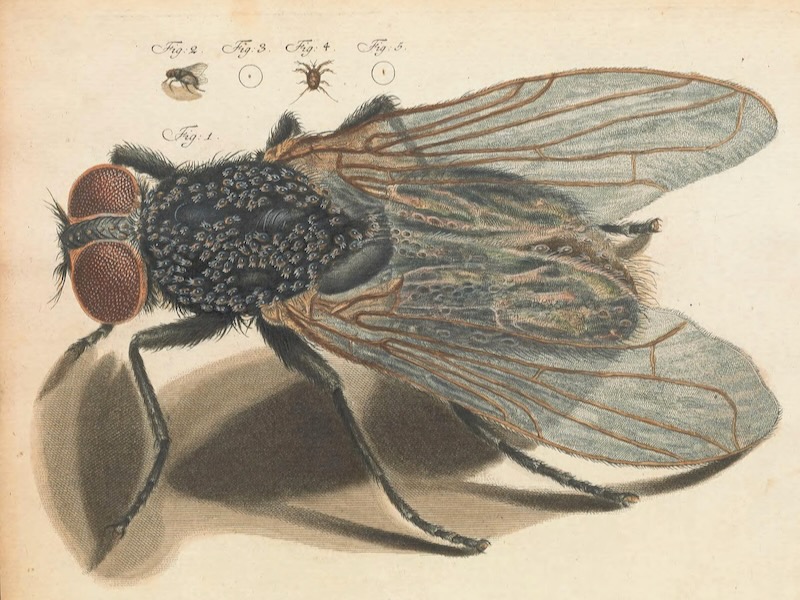
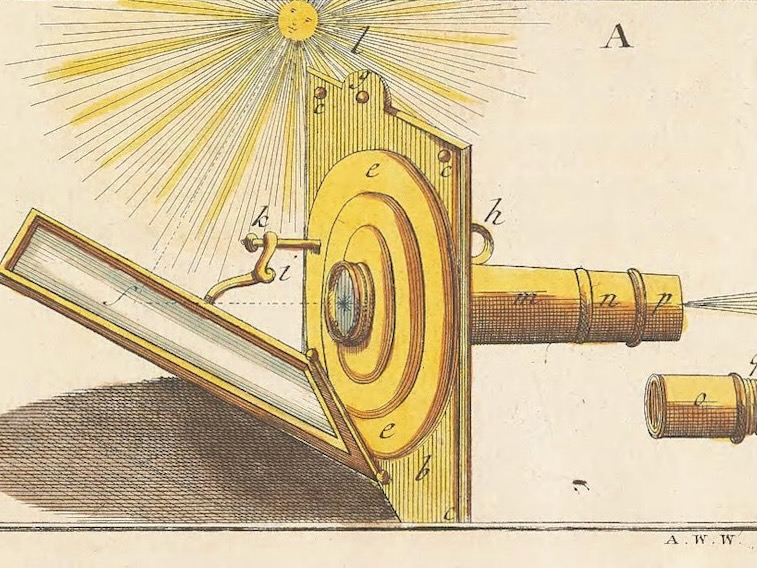
This issue features illustrations by German polymath and physician Martin Frobenius Ledermüller (1718–1769), whose three-volume Microscopic Delights of the Mind and Eyes featured, in full hand-colored clarity, lice, fleas, houseflies, and other vermin.
Novel and astonishing as they may have been for Enlightenment readers, it is difficult for us to comprehend how the magnifications of lice, fleas, houseflies, and other vermin might have been conceived as amusements for the mind and eyes. In full hand-colored clarity, stingers, pincers, biting mouthparts, and other irksome insect organs become menacing monsters thanks to the powers of the microscope in Martin Frobenius Ledermüller’s three-volume Microscopic Delights of the Mind and Eyes.
For all of their scientific verisimilitude, microscopes were first and foremost instruments of wonder, and Ledermüller (1718–1769) — a German polymath, physician, and keeper of the Margrave of Brandenburg’s natural history collection — extolls their virtues for illustration and pure entertainment. Along with the vermin, Ledermüller gave state-of-the-art descriptions of plant, animal, and human organs, fungi, plankton, and crystals that accompany more than 150 attractive colored plates, produced by Nuremberg publisher, artist, and engraver Adam Wolfgang Winterschmidt. From Public Domain Review.