Minnesota Miracle Man & In the Offing
|


In this issue, Brett Biebel shows us what happens when one pays close attention to roadside attractions (or distractions) in two flash pieces, “Minnesota Miracle Man” and “In the Offing.”
E. M. Mariani explores the truth of a long-ago admission and the mixed blessings of motherhood in “Mother’s Teeth.”
And Linda Parsons examines the conditions under which light comes and to what degrees it can be observed in three poems beginning with “The Light around Trees in the Morning.”
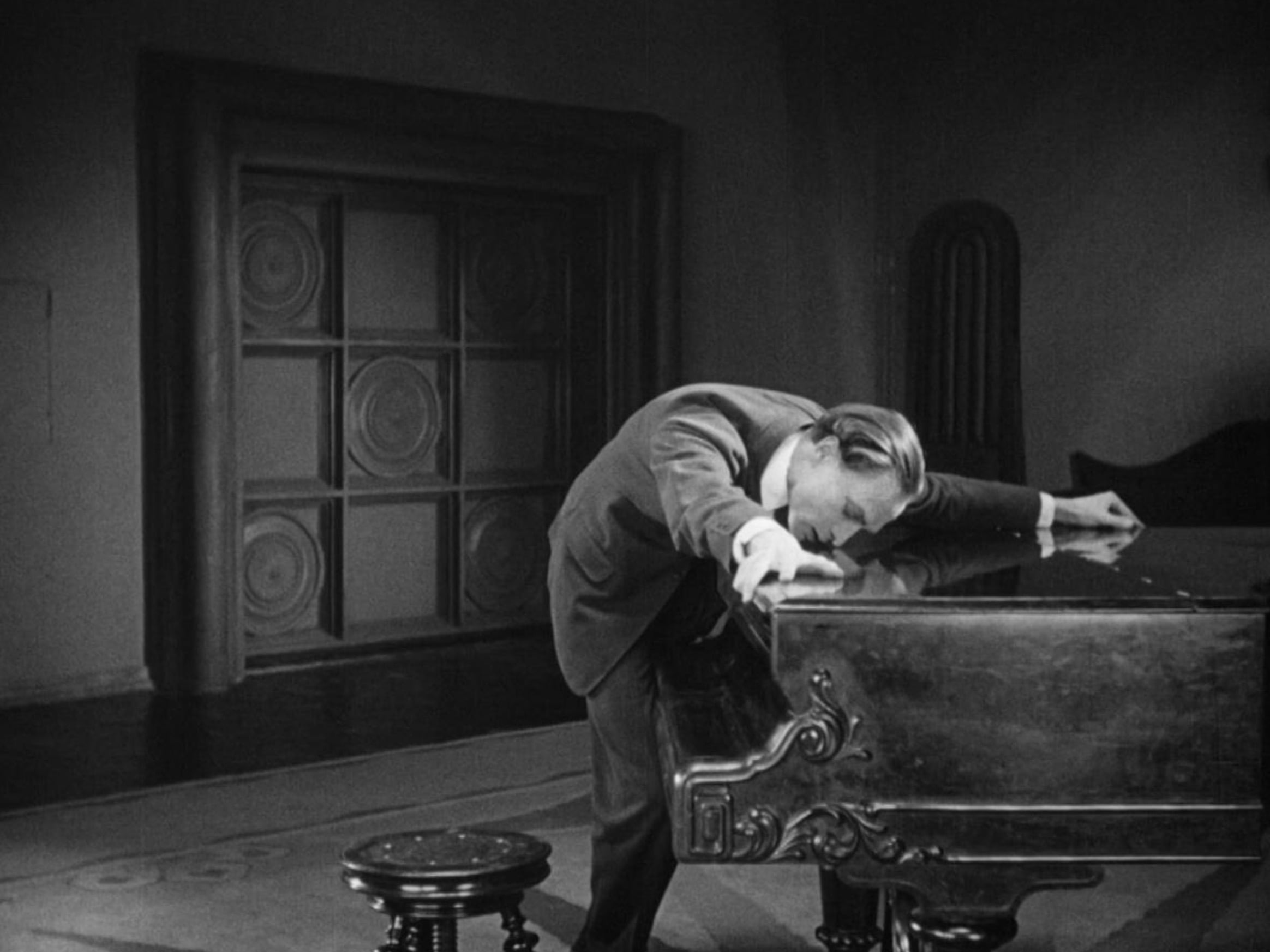
This issue features stills from the 1924 silent film The Hands Of Orlac, directed by Robert Wiene and starring Conrad Veidt. The film is one of the first to depict transplantation as a moral and artistic conundrum.
Stills from the 1924 silent film The Hands Of Orlac, directed by Robert Wiene and starring Conrad Veidt. The film is one of the first to depict transplantation as a moral and artistic conundrum. Veidt plays Orlac, famed concert pianist, whose hands are damaged beyond repair in an accident. Orlac’s wife (played by Alexandra Sorina) pleads with the surgeon that hand transplants be performed, but the surgeon explains that the transplanted hands will be those of an executed criminal. The film then examines Orlac’s moral and creative crisis as he comes to believe that his hands are no longer the instruments of beauty but of corruption. The film was remade five times in one form or another over the 20th century, with each version emphasizing a different aspect of the “identity transfer” that some suppose to accompany transplantation.