Unknown Caller
|


In our first issue of 2022, Ben Kaufman searches for the ghost in the machine as he questions the way language and meaning changes through time in “Unknown Caller.”
Pauletta Hansel views various effects of trying to live as the marrow in someone else’s bones in three poems beginning with “So Maybe It’s True.”
And George Singleton shares the story of a boy named Renfro who wants only to earn his driver’s license and to reconcile his odd parents in “Here’s a Little Song.”
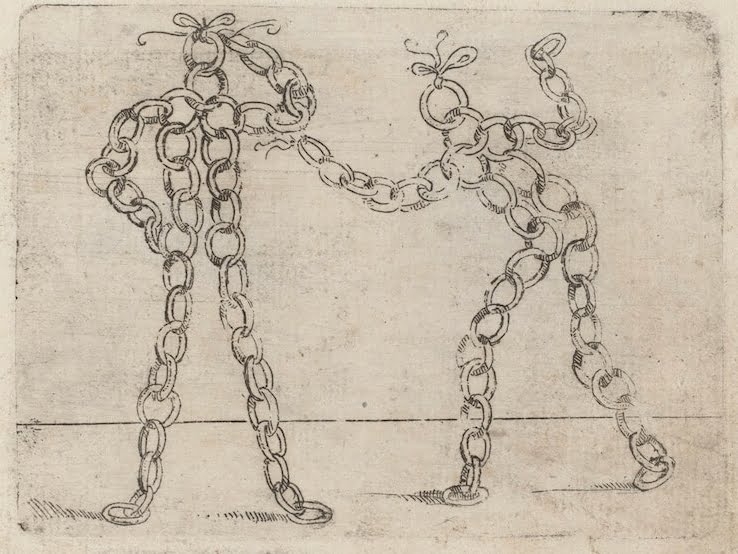
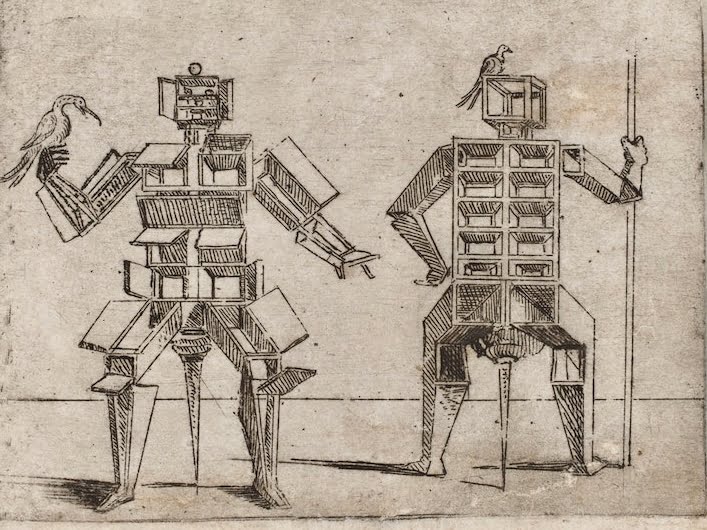
The images in this issue are the work of Giovanni Battista Bracelli, a 17th century Italian engraver and painter working in Florence, who produced a variety of human figures mainly interacting in pairs, their bodily forms composed of a range of objects, mostly abstract—cubes, interlocking rings, and squares—but also such things as rackets, screws, braided hair, and the natural forms of trees.
In 1624, Giovanni Battista Bracelli—an Italian engraver and painter working in Florence—produced an extraordinary book of prints titled Bizzarie di Varie Figure (Oddities of various figures). Its forty-seven plates show a variety of human figures mainly interacting in pairs, their bodily forms composed of a range of objects, mostly abstract—cubes, interlocking rings, and squares—but also such things as rackets, screws, braided hair, and the natural forms of trees. From Public Domain Review.