Nick had gotten by as a landscaper: not raked in dough, by any means, but his wife Cynthia made good money at her tech start-up, so the expectation was merely that Nick would “pull his own weight.” It was a nebulous concept. Still, he’d never felt burdensome or dependent—the “weight” instead of the puller—until the drought kicked in, and the governor of California imposed water restrictions.
“Work literally dried up” was Nick’s line, which he thought was clever, even profound. He posted it on Facebook, alongside a photo of a brown lawn. In the past, he’d never considered why water was a metaphor for jobs, since outside of his line of work, water had not seemed important in most professions. He was proud of that line, until his seventeen-year-old daughter Georgia rolled her eyes and said “Dad joke.” Nick wanted to point out it was reality, not a fucking joke.
Some clients adapted. They had Nick replace their lawns with sand-colored pebbles, their hydrangeas with succulents. His favorite client, Terri, loved her succulents, particularly the alien ones, the Aeonium roses that looked like artichokes wrought from iron. But most people simply gave up on gardens, let everything wither.
Nick didn’t want to go to Cynthia for handouts. As if he were another “dependent” on the tax form. It seemed like Cynthia started to resent him, acting put out when she found edibles in his pocket. They only cost $12 each. He’d never given her shit about her cases of wine.
During the pandemic, Cynthia’s job had gone remote, and now that the pandemic was over (to the extent it would ever be over), she continued working from home. Their kitchen had become, for all practical purposes, her office. She camped at the table, spreading her papers everywhere. When Nick came upstairs to make his coffee she side-eyed him, non-verbally commanding silence, in his own house, which less and less felt like his own house. Even from downstairs, Nick could hear Cynthia’s voice, louder than usual as she joined her endless Zoom meetings and took calls on her speaker phone to keep her hands free.
Once he heard her friend Zane saying to her, “Well, at least you have a good job.”
“‘Good,’” Cynthia snorted. “Well, I guess it depends on how you define ‘good.’ If you mean I make money, fine. But if you mean it’s at all satisfying or fulfilling or enjoyable, I beg to differ. Remember those videos about what soda would do to your teeth? That’s how I feel about my job: like my soul is a tooth in a glass, corroding.”
Cynthia was speaking even more loudly than usual, Nick suspected, because she intended him to hear.
What could he do? He couldn’t make it rain. Which was yet another way water was a metaphor for work, “rainmaker” being the term in Cynthia’s tech world for people who brought in big money. Who pulled their weight.
The carburetor of his truck needed replacing, but Nick put it off. He didn’t want to ask Cynthia for the money. Besides, he was less dependent on the truck in these days of succulents, everything scaled down. At the plant nursery, instead of purchasing lemon trees, Japanese maples, and rose bushes for clients, he bought trays of pale Moonstones, aloe, easily portable.
Nick started taking the bus more often, to jobs but also simply to escape tiptoeing around his house. In San Francisco, masks were no longer required on public transportation, though they were still advised. Whatever that meant. More and more people didn’t wear masks. Nick looked for patterns. On routes through the Mission, commuters seemed averse to masks. Young people weren’t wearing them.
Relatedly, more people talked on their phones. On one bus, a woman in her twenties said very loudly, “I told you! I told you!” She was almost screaming. Nick wanted to tell her to chill out; he wanted to know what she had told.
It seemed as if the distinction between inside and outside had melted or even inverted. People acted like public spaces were private spaces, like no one was watching them misbehave and carry on. Nick’s home was Cynthia’s office; he commuted to Terri’s garden on a stuffy bus with a box of damp succulents in his lap.
Their daughter Georgia skulked around their house, looking increasingly like her mother: not in her features, Georgia had always resembled Nick, but in the way she deployed them. Side-eyes at Nick.
It was harder and harder to get into college, Georgia fretted. “Not like for you and Mom.” Everything was harder. The news feed was full of how the pandemic and the Trump years prior had created a mental health crisis for teens. Nick pictured teenagers as teeth, dissolving in corrosive liquid.
They’d scheduled Georgia’s wisdom teeth removal for winter break, since she didn’t want to have her friends see her face swollen and bruised. (Georgia curated her appearance carefully; she used filters on Instagram, knew her best angles, and wouldn’t leave the house without drawing eyeliner wings). Since Nick was the parent with all the free time, Cynthia appointed him to sit in the waiting room for three hours while Georgia’s four impacted wisdom teeth were extracted and she came out of anesthesia. A conical diffuser plugged into the wall emitted a vapor that smelled like eucalyptus. It made Nick long to be outside, spade in hand, earbuds in, the sun on his neck.
He tried to read the book Georgia had given him for his birthday, Octavia Butler’s Parable of the Sower. “You’ll love this, Dad. It’s all about water shortages.” Was she kidding? Nick closed the book and doom scrolled. The new theory was that the ecological disaster that most threatened California was not drought, wildfires, or earthquakes, but a month-long “superstorm.” Climate change had increased the risk exponentially, some scientist claimed.
When the nurse finally brought him in to Georgia, Nick was shocked. The oral surgeon had warned them there would be swelling and bruising. “You’re very fair-skinned,” Dr. Weiss had said to Georgia during the consultation appointment, in a tone that struck Nick as creepy, a little lecherous. Poor Georgia looked like someone had beaten her up. Mascara tears had left muddy rivers down her cheeks.
His truck was still not functional, so once they were outside Nick ordered an Uber. Doing so required removing his arm from around Georgia, wobbly in her Frankenstein boots—bad fashion choice, Nick realized now, for getting wisdom teeth removed. As soon as he confirmed the Uber, he looped his arm back around her, and she leaned against him. When Georgia was younger, they had been very close, in a way that made Cynthia feel excluded. “She loves you more,” she’d complained, and though Nick had said, “No, no,” privately he’d agreed. Some Saturdays Nick had brought Georgia on jobs, assigned her the light things, pulling weeds with her nimble fingers. In eighth grade, she’d started pulling away, making fun of him. “I’m just teasing, Dad,” she’d say, but “teasing” felt far too benign a characterization. These days, Nick suspected Georgia saw him as annoying, even pitiful. All developmentally normal, according to Cynthia (it was difficult not to see Cynthia as smug, now she was the favored parent, and her sympathy as inadequate and performative). “She blows me off too,” Cynthia said, though sometimes Georgia invited her to go thrifting. Because Cynthia would buy her shit, Nick thought uncharitably.
“Daddy,” Georgia said. When had she last called him Daddy? Nick tightened his arm around Georgia, his bruised daughter who would be leaving them, too soon, converting their house into even more of a husk. “I woke up maybe an hour ago, and was lying in that recovery room. People kept walking in and out.” It was hard to understand her, with the cotton packed in her mouth. “I felt so undignified,” she said.
The adjective made Nick smile, then nod. He thought of that Facebook prompt: “What’s your status?” Such a revealing word choice, “status,” to signify how a person currently felt. Undignified, indeed.
Kim Magowan lives in San Francisco and teaches in the Department of Literatures and Languages at Mills College. Her short story collection Undoing (2018) won the 2017 Moon City Press Fiction Award. Her novel The Light Source (2019) was published by 7.13 Books. Her second story collection, How Far I’ve Come, was recently published by Gold Wake Press. Her fiction has been published in Atticus Review, Cleaver, The Gettysburg Review, Hobart, Smokelong Quarterly, Wigleaf, and many other journals. Her stories have been selected for Best Small Fictions and Wigleaf’s Top 50. She is the Editor-in-Chief and Fiction Editor of Pithead Chapel.
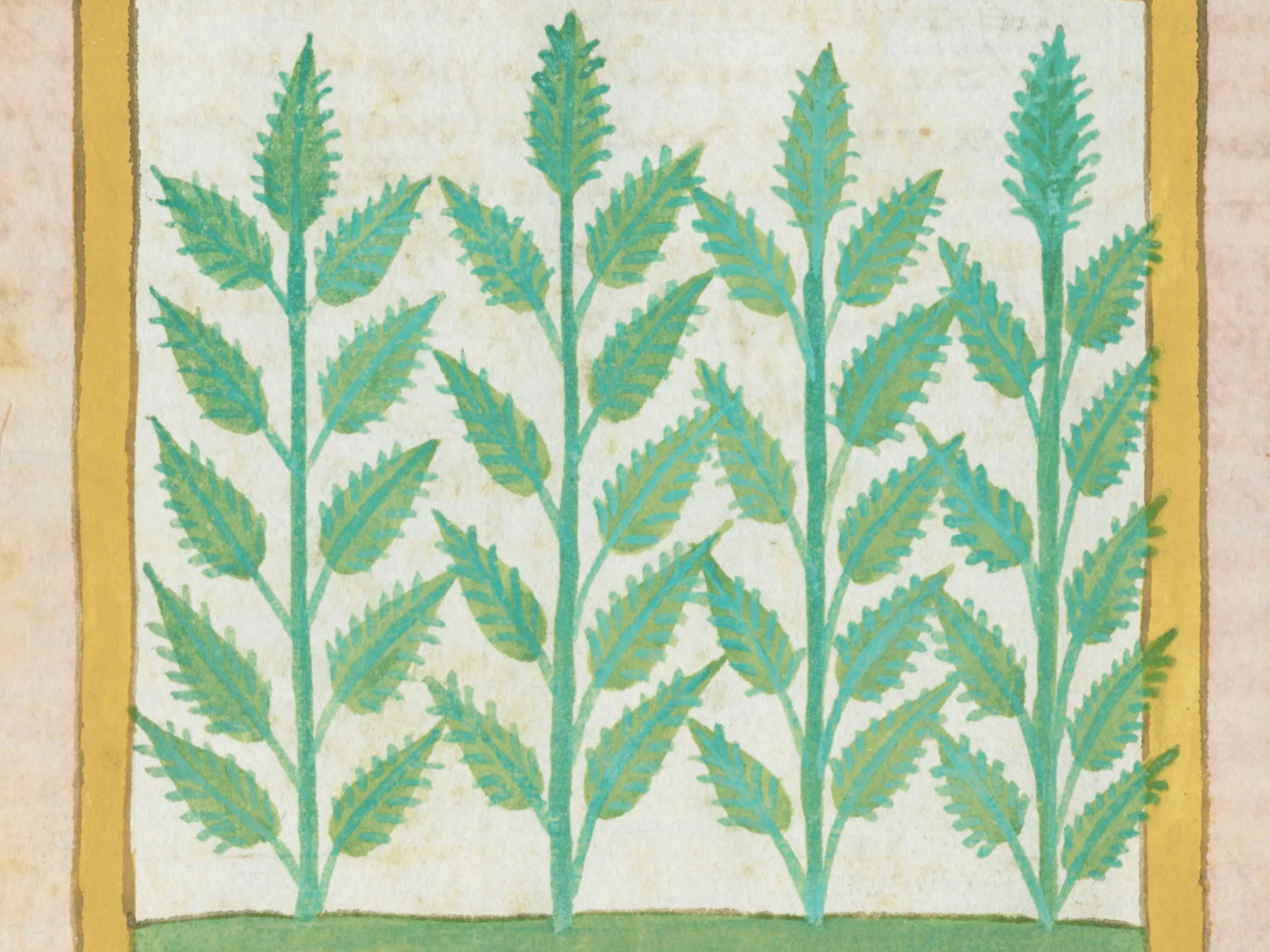
Images from Johannes Hartlieb’s Book of Herbs (1462). [via The Public Domain Review, https://publicdomainreview.org/collection/hartlieb-book-of-herbs/}